
local man needs therapy, more at 11


A philosophical framework for understanding the contemporary mental health crisis.
I bought and read this a while ago after seeing it referenced in a Sisyphus55 video. This is my second read. Hopefully I’ll understand it better this time around.

An anthology of John Muir’s works. Reading this inspired me to finally visit Muir Woods.
“To get these glorious works of God into yourself - that’s the thing; not to write about them!” (xiii)
Muir never owned an automobile and he disliked to ride in one. This was to be expected from a man who had complained that it was impossible to see anything worthwhile from a stagecoach traveling forty miles a day. (xviii)
I was desperately hungry and thirsty for knowledge and willing to endure anything to get it. (66)
On no subject are our ideas more warped and pitiable than on death. Instead of the sympathy, the friendly union, of life and death so apparent in Nature, we are taught that death is an accident, a deplorable punishment for the oldest sin, the arch-enemy of life, etc. Town children, especially, are steeped in this death-orthodoxy, for the natural beauties of death are seldom seen or taught in towns. (89)
Often I thought I would like to explore the city if, like a lot of wild hills, and valleys, it was clear of inhabitants. (96)
Something that has always been on my bucket list is exploring Termesos, an ancient city in Turkey that was abandoned 1500 years ago after an earthquake destroyed its aqueduct. It is remarkably well preserved because it is incredibly remote and rests on a steep mountain surrounded by deep ravines.
All the world was before me and every day was a holiday, so it did not seem important to which one of the world’s wildernesses I first should wander. (101)
[John Muir] reached California early enough to observe the dramatic and tragic suddenness of change which the blighting decades of lumbering and ranching brought. (102)
Along the river, over the hills, in the ground, in the sky, spring work is going on with joyful enthusiasm, new life, new beauty, unfolding, unrolling in glorious exuberant extravagance - new birds in their nests, new winged creatures in the air, and new leaves, new flowers, spreading, shining, rejoicing everywhere. (109)
Precious night, precious day to abide in me forever. Thanks be to God for this immortal gift. (115)
But in the face of Yosemite scenery cautious remonstrance is vain; under its spell one’s body seems to go where it likes with a will over which we seem to have scarce any control. (126)
… pitying the poor Professor and General, bound by clocks, almanacs, orders, duties, etc., and compelled to dwell with lowland care and dust and din, where Nature is covered and her voice smothered, while the poor, insignificant wanderer enjoys the freedom and glory of God’s wilderness. (139)
But the ouzel never calls forth a single touch of pity; not because he is strong to endure, but rather because he seems to live a charmed life beyond the reach of every influence that makes endurance necessary. (149)
I have often been delighted to see a pure, spiritual glow come into the countenances of hard business men and old miners, when a songbird chanced to alight near them. (159)
(On Emerson) It was seventeen years after our parting on the Wawona ridge that I stood beside his grave under a Pine tree on the hill above Sleepy Hollow. He had gone to higher Sierras, and, as I fancied, was again waving his hand in friendly recognition. (165)
(On earthquakes) I said: “Come, cheer up; smile a little and clap your hands, now that kind Mother Earth s trotting us on her knee to amuse us and make us good.” But the well-meant joke seemed irreverant and utterly failed, as if only prayerful terror could rightly belong to the wild beauty-making business. (168)
(On snow banners) Innumerable peaks, black and sharp, rose grandly into the dark blue sky, their bases set in solid white, their sides streaked and splashed with snow, like ocean rocks with foam; and from every summit, all free and unconfused, was streaming a beautiful silky silvery banner, from half a mile to a mile in length, slender at the point of attachment, then widening gradually as it extended from the peak until it was about 1000 or 1500 feet in breadth, as near as I could estimate. (172)
Any kind of simple natural destruction is preferable to the numb, dumb, apathetic deaths of a town. (176)
… I suddenly recognized a sea-breeze, as it came sifting through the Palmettos and blooming vine-tangles, which at once awakened and set free a thousand dormant associations, and made me a boy again in Scotland, as if all the intervening years had been annihilated. (189)
Pines are commonly regarded as sky-loving trees that must necessarily aspire or die. (192)
The [pine] needles, which have accumulated for centuries, make fine beds, a fact well known to other mountaineers, such as deer and wild sheep, who paw out oval hollows and lie beneath the larger trees in safe and comfortable concealment. (192)
Douglas squirrels: “He is the squirrel of squirrels” (197) // “But in wet or cold weather he stays in his nest, and while curled up there his comforter is long enough to come forward around his nose.” (199) // “I know one seed-gatherer who, whenever he robs the squirrels, scatters wheat or barley beneath the trees as conscience-money.” (202) // “how much unmistakable humanity I have found in [the squirrel]” (203)
A free man revels in a scene like this and time goes by unmeasured. (219)
The saddest thing of all was to see the hopeful seedlings, many of them crinkled and bent with the pressure of winter snow, yet bravely aspiring at the top, helplessly perishing, and young trees, perfect spires of verdure and naturally immortal, suddenly changed to dead masts. Yet the sun looked cheerily down the openings in the forest roof, turning the black smoke to a beautiful brown, as if all was for the best. (225)
I had told the beauty of Shadow Lake only to a few friends, fearing it might come to be trampled and “improved” like Yosemite. … shortly afterward, my worst fears were realized. A trail had been made down the mountain-side from the north, and all the gardens and meadows were destroyed by a horde of hoofed locusts, as if swept by a fire. The money-changers were in the temple. (243)
The above reminds me of a quote from A Book of Noises: “Isn’t there some different way that humanity could interact with the wild world than by just desecrating it?”
two “weary municipal weeks” in Oakland and San Francisco (244)
also where I spend my weary municipal weeks!
(After nearly falling to his death) “There”, said I, addressing my feet, to whose separate skill I had learned to trust night and day on any mountain, “that is what you get by intercourse with stupid town stairs, and dead pavements.” (245)
… the inexperienced observer is oppressed by the incomprehensible grandeur, variety, and abundance of the mountains rising shoulder to shoulder beyond the reach of vision (247)
(On glaciers) … in the midst of this outer steadfastness we know there is incessant motion and change. (247)
Life is then seen to be a fire, that now smouldeers, now brightens, and may be easily quenched. (263)
Mountaineers, however, always find in themselves a reserve of power after great exhaustion. (264)
… their eager childlike attention was refreshing to see as compared with the deathlike apathy of weary town-dwellers, in whom natural curiosity has been quenched in toil and care and poor shallow comfort. (272)
this one seemed so small and worthless (278) // a perfect wonder of a dog (278) // was named “Stickeen” for the tribe, and became a universal favorite; petted, protected, and admired wherever he went, and regarded as a mysterious fountain of wisdom (279) // as for mere rain, he flourished in it like a vegetable (281) // I saw that he was not to be shaken off; as well might the earth try to shake off the moon (284) // His stout, muffled body seemed all one skipping muscle (286) // silent, able little hero (287)
None of Stickeen’s friends knows what finally became of him. After my work for the season was done I departed for California, and I never saw the dear little fellow again. In reply to anxious inquiries his master wrote me that in the summer of 1883 he was stolen by a tourist at Fort Wrangell and taken away on a steamer. His fate is wrapped in mystery. Doubtless he has left this world - crossed the last crevasse - and gone to another. But he will not be forgotten. To me Stickeen is immortal. (296)

In nothing does man, with his grand notions of heaven and charity, show forth his innate, low-bred, wild animalism more clearly than in his treatment of his brother beasts. From the shepherd with his lambds to the red-handed hunter, it is the same; no recognition of rights - only murder in one form or another. (302)
I only went out for a wealk and finally concluded to stay out till sundown, for going out, I found, was really going in. (312)
No matter into what depths of degradation humanity may sink, I will never despair while the lowest love the pure and the beautiful and know it when they see it. (312)
This grand show is eternal. (312)
Most people are on the world, not in it - have no conscious sympathy or relationship to anything about them - undiffused, separate, and rigidly alone like marbles of polished stone, touching but separate. (313)
The world, we are told, was made especially for man - a presumption not supported by all the facts. A numerous class of men are painfully astonished whenever they find anything, living or dead, in all God’s universe, which they cannot eat or render in some way what they call useful to themselves. They have precise dogmatic insight into the intentions of the Creator, and it is hardly possible to be guilty of irreverence in speaking of their God any more than of heathen idols. He is regarded as a civilized, law-abiding gentlemen in favor either of a republican form of government or of a limited monarchy; believes in the literature and language of England; is a warm supporter of the English constitution and Sunday schools and missionary societies; and is as purely a manufactured article as any puppet at a half- penny theater.
With such views of the Creator it is, of course, not surprising that erroneous views should be entertained of the creation. To such properly trimmed people, the sheep, for example, is an easy problem - food and clothing “for us,” eating grass and daisies white by divine appointment for this predestined purpose, on perceiving the demand for wool that would be occasioned by the eating of the apple in the Garden of Eden.
In the same pleasant plan, whales are storehouses of oil for us, to help out the stars in lighting our dark ways until the discovery of the Pennsylvania oil wells. Among plants, hemp, to say nothing of the cereals, is a case of evident destination for ships’ rigging, wrapping packages, and hanging the wicked. Cotton is another plain case of clothing. Iron was made for hammers and ploughs, and lead for bullets; all intended for us. And so of other small handfuls of insignificant things.
But if we should ask these profound expositors of God’s intentions, How about those man-eating animals - lions, tigers, alligators - which smack their lips over raw man? Or about those myriads of noxious insects that destroy labor and drink his blood? Doubtless man was intended for food and drink for all these? Oh no! Not at all! These are unresolvable difficulties connected with Eden’s apple and the Devil. Why does water drown its lord? Why do so many minerals poison him? Why are so many plants and fishes deadly enemies? Why is the lord of creation subjected to the same laws of life as his subjects? Oh, all these things are satanic, or in some way connected with the first garden.
Now, it never seems to occur to these far- seeing teachers that Nature’s object in making animals and plants might possibly be first of all the happiness of each one of them, not the creation of all for the happiness of one. Why should man value himself as more than a small part of the one great unit of creation? And what creature of all that the Lord has taken the pains to make is not essential to the completeness of that unit - the cosmos? The universe would be incomplete without man; but it would also be incomplete without the smallest transmicroscopic creature that dwells beyond our conceitful eyes and knowledge.
From the dust of the earth, from the common elementary fund, the Creator has made Homo sapiens. From the same material he has made every other creature, however noxious and insignificant to us. They are earth-born companions and our fellow mortals. The fearfully good, the orthodox, of this laborious patch-work of modern civilization cry “Heresy” on every one whose sympathies reach a single hair’s breadth beyond the boundary epidermis of our own species. Not content with taking all of earth, they also claim the celestial country as the only ones who possess the kind of souls for which that imponderable empire was planned.
This star, our own good earth, made many a successful journey around the heavens ere man was made, and whole kingdoms of creatures enjoyed existence and returned to dust ere man appeared to claim them. After human beings have also played their part in Creation’s plan, they too may disappear without any general burning or extraordinary commotion whatever.
Plants are credited with but dim and uncertain sensation, and minerals with positively none at all. But why may not even a mineral arrangement of matter be endowed with sensation of a kind that we in our blind exclusive perfection can have no manner of communication with?
But I have wandered from my subject. I stated a page or two back that man claimed the earth was made for him and I was going to say that venomous beasts, thorny plants, and deadly diseases of certain parts of the earth prove that the whole world was not made for him. When an animal from a tropical climate is taken to high latitudes, it may perish of cold, and we say that such an animal was never intended for so severe a climate. But when man betakes himself to sickly parts of the tropics and perishes, he cannot see that he was never intended for such deadly climates. No, he will rather accuse the first mother of the cause of the difficulty, though she may never have seen a fever district; or will consider it a providential chastisement for some self-invented form of sin.
Furthermore, all uneatable and uncivilized animals, and all plants which carry prickles, are deplorable evils which, according to closes researches of clergy, require the cleansing chemistry of universal planetary combustion. But more than aught else mankind requires burning, as being in great part wicked, and if that transmundane furnace can be so applied and regulated as to smelt and purify us into conformity with the rest of the terrestrial creation, then the tophetization of the erratic genius Homo were a consummation devoutly to be prayed for. But, glad to leave these ecclesiastical fires and blunders, I joyfully return to the immortal truth and immortal beauty of Nature.
… there is not a perfectly sane mane in San Francisco. (319 - real)
in slippery obedience to the law of gravitation (83) // a monument of passive endurance (151, on pine trees) // the streams tracing the ancient glaciers, the ouzels tracing the streams (155) // dark and cloudy vicissitudes of the Oakland period (177) // who in going into the woods has at last gone home (210) // the quick death of childlike Sequoias only a century or two of age (223) // now only a matter of endurance and ordinary mountain-craft (249) // pale, shimmering, limpid tones in the crevasses and hollows, to the most startling, chilling, almost shrieking vitriol blue (269 - glaciers) // the whole making a picture of icy wildness unspeakably pure and sublime (270) // in the fullness of time (271)

Anthology of short stories and poems by queer authors.


“All conditioning aims at that: making people like their unescapable social destiny.” (16)
“No civilization without social stability. No social stability without individual stability… The machine turns, turns and must keep on turning - for ever. It is death if it stands still… Wheels must turn steadily, but cannot turn untended. There must be men to tend them, men as steady as the wheels upon their axles, sane men, obedient men, stable in contentment.” (42)
“Has any of you been compelled to live through a long time-interval between the consciousness of a desire and its fulfillment?” (45)
“You can’t make flivvers without steel - and you can’t make tragedies without social instability.” (220)
“Actual happiness always looks pretty squalid in comparison with the overcompensations for misery. And, of course, stability isn’t nearly so spectacular as instability. And being contented has none of the glamour of a good fight against misfortune, none of the picturesqueness of a struggle with temptation, or a fatal overthrow by passion or doubt. Happiness is never grand.” (221)
“An Alpha-decanted, Alpha-conditioned man would go mad if he had to do Epsilon Semi-Moron work.” (222)
“The optimum population,” said Mustapha Mond, “is modelled on the iceberg - eight-ninth below the water line, one-ninth above.” (223)
“… you’re so conditioned that you can’t help doing what you ought to do.” (237)
“But I don’t want comfort. I want God, I want poetry, I want real danger, I want freedom, I want goodness. I want sin.”
“In fact,” said Mustapha Mond, “you’re claiming the right to be unhappy.”
“All right then,” said the Savage defiantly, “I’m claiming the right to be unhappy.”
“Not to mention the right to grow old and ugly and impotent; the right to have syphilis and cancer; the right to have too little to eat; the right to be lousy; the right to live in constant apprehension of what may happen tomorrow; the right to catch typhoid; the right to be tortured by unspeakable pains of every kind.” There was a long silence.
“I claim them all,” said the Savage at last. (240)
Slowly, very slowly, like two unhurried compass needles, the feet turned towards the right; north, north-east, east, south-east, south, south-south-west; then paused, and, after a few seconds, turned as unhurriedly back towards the left. South-south-west, south, south-east, east… (259)

List of words I liked, and reflections.

A Roman emperor’s personal notes on how life should be lived.

Manifest Destiny, but Mars.

(Retroactive update) Read because I had recently finished Digital Minimalism and was looking for books in the same vein.
I just know if Posty had been around to witness Tik Tok he would have had an aneurysm.
I want to rip out this chapter and staple it to my forehead

(Retroactive update) Bought because I’ve been listening to The War on Cars podcast lately. I’m fortunate enough to live in the SF Bay Area which has very good public transit and allows me to exist comfortably without owning a vehicle.
I am not against cars themselves, I’m against car dependency and the attitude that the automobile should be the default method of transport for everyday living.
Muir never owned an automobile and he disliked to ride in one. This was to be expected from a man who had complained that it was impossible to see anything worthwhile from a stagecoach traveling forty miles a day. (John Muir, The Wilderness World of John Muir)
Why must we sacrifice our loved ones to appease the automotive gods? When will people matter more than parking? (24)
… all changes to social norms generate four reactions in successive order: they’re perceived as silly, then controversial, then progressive, before finally being seen as obvious. (45)
If we could realize what cars to do us, and what they take from us, then we might be more motivated to demand change. But as it stands, many people are too busy to explore a car-free life, or too poor to visit a car-free or non-car dependent city. (135)
We are so eager to accomodate the hunger of drivers for free or cheap car storage that we will do anything to feed their bottomless appetite. Downtowns become vast parking lots while people go unhoused. (165)
This massive conduit for personal motor vehicles, like all American freeways, has enabled suburban commuters nominally seamless access to the city - from which they extract wealth in the form of wages without having to worry about giving anything back to the community in taxes or any other way. (173)
Our transportation infrastructure is a complicated web of cause and effect that is, for the most part, determined by the insatiable need for space. Space to park, space to drive, space to idle while waiting to park or drive. Every human aspiration and desire is pushed aside in favor of the car. (177)
The streets are not just channels to bring motorized traffic from point A to point B. They are also places to live. (194)
We should be focuseing on reducing the need for car ownership in the first place, while also electrifying public transit and delivery vehicles rather than unquestioningly buying into yet another fantasy of harm-free personal motor vehicle transport as salvation. (227)


The vast cosmos, which started with sound, is not silent for the most part. (16)
We don’t know why whales sing. “Perhaps they are just playing.” (110)
Isn’t there some different way that humanity could interact with the wild world than by just desecrating it? (115)
…a colonial mentality that has turned much of the world into a standing reserve of resources that can be extracted without consequence."" (139)


A TV producer rambles about talking to people for 320 pages.


On the quiet acceptance of fate

A pioneer family takes a wrong turn during the journey westward. This is their horrifying story.

I was taking great gulps of air and heading east, because when I am running for my life it is always to Gracie that I run. (54)
A woman kneeling on her chair said, ‘To have finally reached the end of a long road, only to find it connected to another long road?’
It was so embarrassing to have dragged the narcissism of small differences all the way across dimensions, and so anachronistic to go on pretending there had ever been a single meaningful distinction between human beings worth making.
And I remembered how, when I was alive, I always wanted to die ‘in my sleep’: that made me feel ashamed now. How ludicrous to want to die without noticing it while never realising that you had lived without noticing it too.
I told her that she was very special to me while thinking how her love had always felt like an abstraction anyway, like it didn’t pertain to me but rather the space I occupied.


One of my favorites!
aka the greatest run-on sentence known to man
A legion of horribles, hundreds in number, half naked or clad in costumes attic or biblical or wardrobed out of a fevered dream with the skins of animals and silk finery and pieces of uniform still tracked with the blood of prior owners, coats of slain dragoons, frogged and braided cavalry jackets, one in a stovepipe hat and one with an umbrella and one in white stockings and a bloodstained weddingveil and some in headgear of cranefeathers or rawhide helmets that bore the horns of bull or buffalo and one in a pigeontailed coat worn backwards and otherwise naked and one in the armor of a Spanish conquistador, the breastplate and pauldrons deeply dented with old blows of mace or sabre done in another country by men whose very bones were dust and many with their braids spliced up with the hair of other beasts until they trailed upon the ground and their horses’ ears and tails worked with bits of brightly colored cloth and one whose horse’s whole head was painted crimson red and all the horsemen’s faces gaudy and grotesque with daubings like a company of mounted clowns, death hilarious, all howling in a barbarous tongue and riding down upon them like a horde from a hell more horrible yet than the brimstone land of Christian reckoning, screeching and yammering and clothed in smoke like those vaporous beings in regions beyond right knowing where the eye wanders and the lip jerks and drools.
Oh my god, said the sergeant.
He looked at them. They were foul and ragged and half crazed. They’d been making forays at night up the arroyo for wood and water and they had been feeding off a dead mule that lay gutted and stinking in the far corner of the yard. The first thing they asked for was whiskey and the next was tobacco. They had but two animals and one of these had been snakebit in the desert and this thing now stood in the compound with its head enormously swollen and grotesque like some fabled equine ideation out of an Attic tragedy. It had been bitten on the nose and its eyes bulged out of the shapeless head in a horror of agony and it tottered moaning toward the clustered horses of the company with its long misshapen muzzle swinging and drooling and its breath wheezing in the throttled pipes of its throat. The skin had split open along the bridge of its nose and the bone shone through pinkish white and its small ears looked like paper spills twisted into either side of a hairy loaf of dough. The American horses began to mill and separate along the wall at its approach and it swung after them blindly. There was a flurry of thumps and kicks and the horses began to circle the compound. A small mottled stallion belonging to one of the Delawares came out of the remuda and struck at the thing twice and then turned and buried its teeth in its neck. Out of the mad horse’s throat came a sound that brought the men to the door.
He had with him that selfsame rifle you see with him now, all mounted in german silver and the name that he’d give it set with silver wire under the checkpiece in latin: Et In Arcadia Ego. A reference to the lethal in it. Common enough for a man to name his gun. I’ve heard Sweetlips and Hark From The Tombs and every sort of lady’s name. His is the first and only ever I seen with an inscription from the classics.
They rode on. They rode like men invested with a purpose whose origins were antecedent to them, like blood legatees of an order both imperative and remote. For although each man among them was discrete unto himself, conjoined they made a thing that had not been before and in that communal soul were wastes hardly reckonable more than those whited regions on old maps where monsters do live and where there is nothing other of the known world save conjectural winds.
The party was crouched in a stand of willow a half mile from the fires of the enemy. They had muffled the heads of the horses with blankets and the hooded beasts stood rigid and ceremonial behind them. The new riders dismounted and bound their own horses and they sat upon the ground while Glanton addressed them.
We got a hour, maybe more. When we ride in it’s ever man to his own. Dont leave a dog alive if you can help it.
How many is there, John?
Did you learn to whisper in a sawmill?
The kid took hold of the shaft close to the man’s thigh and pressed forward with his weight. Brown seized the ground on either side of him and his head flew back and his wet teeth shone in the firelight. The kid took a new grip and bore down again. The veins in the man’s neck stood like ropes and he cursed the boy’s soul. On the fourth essay the point of the arrow came through the flesh of the man’s thigh and blood ran over the ground. The kid sat back on his heels and passed the sleeve of his shirt across his brow.
Brown let the belt fall from his teeth. Is it through? he said.
It is.
The point? Is it the point? Speak up, man.
The kid drew his knife and cut away the bloody point deftly and handed it up. Brown held it to the firelight and smiled. The point was of hammered copper and it was cocked in its blood-soaked bindings on the shaft but it had held.
Stout lad, ye’ll make a shadetree sawbones yet. Now draw her.
The kid withdrew the shaft from the man’s leg smoothly and the man bowed on the ground in a lurid female motion and wheezed raggedly through his teeth. He lay there a moment and then he sat up and took the shaft from the kid and threw it in the fire and rose and went off to make his bed.
When the kid returned to his own blanket the expriest leaned to him and hissed at his ear.
Fool, he said. God will not love ye forever.
The kid turned to look at him.
Dont you know he’d of took you with him? He’d of took you, boy. Like a bride to the altar.
Jackson, pistols drawn, lurched into the street vowing to shoot the ass off Jesus Christ, the longlegged white son of a bitch.
Whatever exists, he said. Whatever in creation exists without my knowledge exists without my consent.
He looked about at the dark forest in which they were bivouacked. He nodded toward the specimens he’d collected. These anonymous creatures, he said, may seem little or nothing in the world. Yet the smallest crumb can devour us. Any smallest thing beneath yon rock out of men’s knowing. Only nature can enslave man and only when the existence of each last entity is routed out and made to stand naked before him will he be properly suzerain of the earth.
What’s a suzerain?
A keeper. A keeper or overlord.
Why not say keeper then?
Because he is a special kind of keeper. A suzerain rules even where there are other rulers. His authority countermands local judgements.
Toadvine spat.
The judge placed his hands on the ground. He looked at his inquisitor. This is my claim, he said. And yet everywhere upon it are pockets of autonomous life. Autonomous. In order for it to be mine nothing must be permitted to occur upon it save by my dispensation.
Toadvine sat with his boots crossed before the fire. No man can acquaint himself with everthing on this earth, he said.
The judge tilted his great head. The man who believes that the secrets of the world are forever hidden lives in mystery and fear. Superstition will drag him down. The rain will erode the deeds of his life. But that man who sets himself the task of singling out the thread of order from the tapestry will by the decision alone have taken charge of the world and it is only by such taking charge that he will effect a way to dictate the terms of his own fate.
I dont see what that has to do with catchin birds.
The freedom of birds is an insult to me. I’d have them all in zoos.
That would be a hell of a zoo.
The judge smiled. Yes, he said. Even so.
what the fuck is he talking about ever
They grew gaunted and lank under the white suns of those days and their hollow burnedout eyes were like those of noctambulants surprised by day. Crouched under their hats they seemed fugitives on some grander scale, like beings for whom the sun hungered. Even the judge grew silent and speculative. He’d spoke of purging oneself of those things that lay claim to a man but that body receiving his remarks counted themselves well done with any claims at all. They rode on and the wind drove the fine gray dust before them and they rode an army of gray- beards, gray men, gray horses. The mountains to the north lay sunwise in corrugated folds and the days were cool and the nights were cold and they sat about the fire each in his round of darkness in that round of dark while the idiot watched from his cage at the edge of the light. The judge cracked with the back of an axe the shinbone on an antelope and the hot marrow dripped smoking on the stones. They watched him. The subject was war.
The good book says that he that lives by the sword shall perish by the sword, said the black.
The judge smiled, his face shining with grease. What right man would have it any other way? he said.
The good book does indeed count war an evil, said Irving. Yet there’s many a bloody tale of war inside it.
It makes no difference what men think of war, said the judge. War endures. As well ask men what they think of stone. War was always here. Before man was, war waited for him. The ultimate trade awaiting its ultimate practitioner. That is the way it was and will be. That way and not some other way.
He turned to Brown, from whom he’d heard some whispered slur or demurrer. Ah Davy, he said. It’s your own trade we honor here. Why not rather take a small bow. Let each acknowledge each.
My trade?
Certainly.
What is my trade?
War. War is your trade. Is it not?
And it aint yours?
Mine too. Very much so.
What about all them notebooks and bones and stuff?
All other trades are contained in that of war.
Is that why war endures?
No. It endures because young men love it and old men love it in them. Those that fought, those that did not.
That’s your notion.
The judge smiled. Men are born for games. Nothing else. Every child knows that play is nobler than work. He knows too that the worth or merit of a game is not inherent in the game itself but rather in the value of that which is put at hazard. Games of chance require a wager to have meaning at all. Games of sport involve the skill and strength of the opponents and the humiliation of defeat and the pride of victory are in themselves sufficient stake because they inhere in the worth of the principals and define them. But trial of chance or trial of worth all games aspire to the condition of war for here that which is wagered swallows up game, player, all.
Suppose two men at cards with nothing to wager save their lives. Who has not heard such a tale? A turn of the card. The whole universe for such a player has labored clanking to this moment which will tell if he is to die at that man’s hand or that man at his. What more certain validation of a man’s worth could there be? This enhancement of the game to its ultimate state admits no argument concerning the notion of fate. The selection of one man over another is a preference absolute and irrevocable and it is a dull man indeed who could reckon so profound a decision without agency or significance either one. In such games as have for their stake the annihilation of the defeated the decisions are quite clear. This man holding this particular arrangement of cards in his hand is thereby removed from existence. This is the nature of war, whose stake is at once the game and the authority and the justification. Seen so, war is the truest form of divination. It is the testing of one’s will and the will of another within that larger will which because it binds them is therefore forced to select. War is the ultimate game because war is at last a forcing of the unity of existence. War is god.
Brown studied the judge. You’re crazy Holden. Crazy at last.
The judge smiled.
Might does not make right, said Irving. The man that wins in some combat is not vindicated morally. Moral law is an invention of mankind for the disenfranchise-ment of the powerful in favor of the weak. Historical law subverts it at every turn. A moral view can never be proven right or wrong by any ultimate test. A man falling dead in a duel is not thought thereby to be proven in error as to his views. His very involvement in such a trial gives evidence of a new and broader view. The willingness of the principals to forgo further argument as the triviality which it in fact is and to petition directly the chambers of the historical absolute clearly indicates of how little moment are the opinions and of what great moment the divergences thereof. For the argument is indeed trivial, but not so the separate wills thereby made manifest. Man’s vanity may well approach the infinite in capacity but his knowledge remains imperfect and howevermuch he comes to value his judgements ultimately he must submit them before a higher court. Here there can be no special pleading. Here are considerations of equity and rectitude and moral right rendered void and without warrant and here are the views of the litigants despised. Decisions of life and death, of what shall be and what shall not, beggar all question of right. In elections of these magnitudes are all lesser ones subsumed, moral, spiritual, natural.
The judge searched out the circle for disputants. But what says the priest? he said.
Tobin looked up. The priest does not say.
The priest does not say, said the judge. Nihil dicit. But the priest has said. For the priest has put by the robes of his craft and taken up the tools of that higher calling which all men honor. The priest also would be no godserver but a god himself.
Tobin shook his head. You’ve a blasphemous tongue, Holden. And in truth I was never a priest but only a novitiate to the order.
Journeyman priest or apprentice priest, said the judge. Men of god and men of war have strange affinities.
I’ll not secondsay you in your notions, said Tobin. Dont ask it.
Ah Priest, said the judge. What could I ask of you that you’ve not already given?
He first saw them laboring over the plain in the dusk among flowering ocotillo that burned in the final light like horned candelabra. They were led by a pitero piping a reed and then in procession a clanging of tambourines and matracas and men naked to the waist in black capes and hoods who flailed themselves with whips of braided yucca and men who bore on their naked backs great loads of cholla and a man tied to a rope who was pulled this way and that by his companions and a hooded man in a white robe who bore a heavy wooden cross on his shoulders. They were all of them barefoot and they left a trail of blood across the rocks and they were followed by a rude carreta in which sat a carved wooden skeleton who rattled along stiffly holding before him a bow and arrow. He shared his cart with a load of stones and they went trundling over the rocks drawn by ropes tied to the heads and ankles of the bearers and accompanied by a deputation of women who carried small desert flowers in their folded hands or torches of sotol or primitive lanterns of pierced tin.
This troubled sect traversed slowly the ground under the bluff where the watcher stood and made their way over the broken scree of a fan washed out of the draw above them and wailing and piping and clanging they passed between the granite walls into the upper valley and disappeared in the coming darkness like heralds of some unspeakable calamity leaving only bloody footprints on the stone.
He bivouacked in a barren swale and he and the horse lay down together and all night the dry wind blew down the desert and the wind was all but silent for there was nothing of resonance among those rocks. In the dawn he and the horse stood watching the east where the light commenced and then he saddled the horse and led it down a scrabbled trail through a canyon where he found a tank deep under a pitch of boulders. The water lay in darkness and the stones were cool and he drank and fetched water for the horse in his hat. Then he led the animal up onto the ridge and they went on, the man watching the tableland to the south and the mountains to the north and the horse clattering along behind.
By and by the horse began to toss its head and soon it would not go. He stood holding the hackamore and studying the country. Then he saw the pilgrims. They were scattered about below him in a stone coulee dead in their blood. He took down his rifle and squatted and listened. He led the horse under the shade of the rock wall and hobbled it and moved along the rock and down the slope.
The kid rose and looked about at this desolate scene and then he saw alone and upright in a small niche in the rocks an old woman kneeling in a faded rebozo with her eyes cast down.
He made his way among the corpses and stood before her. She was very old and her face was gray and leathery and sand had collected in the folds of her clothing. She did not look up. The shawl that covered her head was much faded of its color yet it bore like a patent woven into the fabric the figures of stars and quartermoons and other insignia of a provenance unknown to him. He spoke to her in a low voice. He told her that he was an American and that he was a long way from the country of his birth and that he had no family and that he had traveled much and seen many things and had been at war and endured hardships. He told her that he would convey her to a safe place, some party of her countrypeople who would welcome her and that she should join them for he could not leave her in this place or she would surely die.
He knelt on one knee, resting the rifle before him like a staff. Abuelita, he said. No puedes escucharme?
He reached into the little cove and touched her arm. She moved slightly, her whole body, light and rigid. She weighed nothing. She was just a dried shell and she had been dead in that place for years.
It was an old hunter in camp and the hunter shared tobacco with him and told him of the buffalo and the stands he’d made against them, laid up in a sag on some rise with the dead animals scattered over the grounds and the herd beginning to mill and the riflebarrel so hot the wiping patches sizzled in the bore and the animals by the thousands and tens of thousands and the hides pegged out over actual square miles of ground and the teams of skinners spelling one another around the clock and the shooting and shooting weeks and months till the bore shot slick and the stock shot loose at the tang and their shoulders were yellow and blue to the elbow and the tandem wagons groaned away over the prairie twenty and twenty-two ox teams and the flint hides by the ton and hundred ton and the meat rotting on the ground and the air whining with flies and the buzzards and ravens and the night a horror of snarling and feeding with the wolves half crazed and wallowing in the carrion.
I seen Studebaker wagons with six and eight ox teams headed out for the grounds not haulin a thing but lead. Just pure galena. Tons of it. On this ground alone between the Arkansas River and the Concho there was eight million carcasses for that’s how many hides reached the railhead. Two year ago we pulled out from Griffin for a last hunt. We ransacked the country. Six weeks. Finally found a herd of eight animals and we killed them and come in. They’re gone. Ever one of them that God ever made is gone as if they’d never been at all.
The ragged sparks blew down the wind. The prairie about them lay silent. Beyond the fire it was cold and the night was clear and the stars were falling. The old hunter pulled his blanket about him. I wonder if there’s other worlds like this, he said. Or if this is the only one.
He went down the walkboard toward the jakes. He stood outside listening to the voices fading away and he looked again at the silent tracks of the stars where they died over the darkened hills. Then he opened the rough board door of the jakes and stepped in. The judge was seated upon the closet. He was naked and he rose up smiling and gathered him in his arms against his immense and terrible flesh and shot the wooden barlatch home behind him.
And they are dancing, the board floor slamming under the jackboots and the fiddlers grinning hideously over their canted pieces. Towering over them all is the judge and he is naked dancing, his small feet lively and quick and now in doubletime and bowing to the ladies, huge and pale and hairless, like an enormous infant. He never sleeps, he says. He says he’ll never die. He bows to the fiddlers and sashays backwards and throws back his head and laughs deep in his throat and he is a great favorite, the judge. He wafts his hat and the lunar dome of his skull passes palely under the lamps and he swings about and takes possession of one of the fiddles and he pirouettes and makes a pass, two passes, dancing and fiddling at once. His feet are light and nimble. He never sleeps. He says that he will never die. He dances in light and in shadow and he is a great favorite. He never sleeps, the judge. He is dancing, dancing. He says that he will never die.

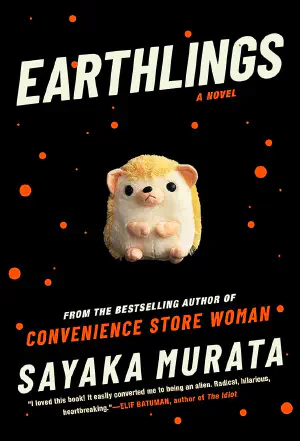

I like that the main character’s last name is Pilgrim, suggesting a straightforward journey to the end destination, when the narrative structure is anything but.
It is so short and jumbled and jangled, Sam, because there is nothing intelligent to say about a massacre. Everybody is supposed to be dead, to never say anything or want anything ever again. Everything is supposed to be very quiet after a massacre, and it always is, except for the birds. And what do the birds say? All there is to say about a massacre, things like “Poo-tee-weet?”
I may have to reconsider some of my job prospects.
(Update 2026: Anduril recruiters in my DMs 😭)
I have told my sons that they are not under any circumstances to take part in massacres, and that the news of massacres of enemies is not to fill them with satisfaction or glee.
I have also told them not to work for companies which make massacre machinery, and to express contempt for people who think we need machinery like that.
“Welcome aboard, Mr. Pilgrim,” said the loudspeaker. “Any questions?”
Billy licked his lips, thought a while, inquired at last: “Why me?”
“That is a very Earthling question to ask, Mr. Pilgrim. Why you? Why us for that matter? Why anything? Because this moment simply is. Have you ever seen bugs trapped in amber?”
“Yes.” Billy, in fact, had a paperweight in his office which was a blob of polished amber with three ladybugs embedded in it.
“Well, here we are, Mr. Pilgrim, trapped in the amber of this moment. There is no why.”
Rosewater said an interesting thing to Billy one time about a book that wasn’t science fiction. He said that everything there was to know about life was in The Brothers Karamazov, by Fedor Dostoevsky. “But that isn’t enough anymore,” said Rosewater.
If what Billy Pilgrim learned from the Tralfamadorians is true, that we will all live forever, no matter how head we may sometimes seem to be, I am not overjoyed. Still - if I am going to spend eternity visiting this moment and that, I’m grateful that so many of those moments are nice.

… People who are demanding, critical, and angry tend to suffer from intense loneliness. I know that a person who acts this way both wants to be seen and is terrified of being seen. I believe that for John, the experience of being vulnerable feels pathetic and shameful - and I’m guessing that he somehow got the message not to show “weakness” at six years old when his mother died. If he spends any time at all with his emotions, they likely overwhelm him, so he projects them onto others as anger, derision, or criticism. That’s why patients like John are especially challenging: they’re masters at getting your goat - all in the service of deflection. (93)

From daydreams on the road there was no waking. He plodded on. He could remember everything of her save her scent. Seated in a theater with her beside him leaning forward listening to the music. Gold scrollwork and sconces and the tall columnar drapes at either side of the stage. She held his hand in her lap and he could feel the tops of her stockings through the thin stuff of her summer dress. Freeze this frame. Now call down your cold and your dark and be damned.
He lay listening, holding the boy. He could hear them in the road talking. Voice of a woman. Then he heard them in the dry leaves. He took the boy’s hand and pushed the revolver into it. Take it, he whispered. Take it. The boy was terrified. He put his arm around him and held him. His body so thin. Dont be afraid, he said. If they find you you are going to have to do it. Do you understand? Shh. No crying. Do you hear me? You know how to do it. You put it in your mouth and point it up. Do it quick and hard. Do you understand? Stop crying. Do you understand?
He walked out in the gray light and stood and he saw for a brief moment the absolute truth of the world. The cold relentless circling of the intestate earth. Darkness implacable. The blind dogs of the sun in their running. The crushing black vacuum of the universe. And somewhere two hunted animals trembling like groundfoxes in their cover. Borrowed time and borrowed world and borrowed eyes with which to sorrow it.
They began to come upon from time to time small cairns of rock by the roadside. They were signs in gypsy language, lost patterans. The first he’d seen in some while, common in the north, leading out of the looted and exhausted cities, hopeless messages to loved ones lost and dead. By then all stores of food had given out and murder was everywhere upon the land. The world soon to be largely populated by men who would eat your children in front of your eyes and the cities themselves held by cores of blackened looters who tunneled among the ruins and crawled from the rubble white of tooth and eye carrying charred and anonymous tins of food in nylon nets like shoppers in the commissaries of hell. The soft black talc blew through the streets like squid link uncoiling along a sea floor and the cold crept down and the dark came early and the scavengers passing down the steep canyons with their torches trod silky holes in the drifted ash that closed behind them silently as eyes. Out on the roads the pilgrims sank down and fell over and died and the bleak and shrouded earth went trundling past the sun and returned again as trackless and as unremarkable as the path of any nameless sisterworld in the ancient dark beyond.
Lying under such a myriad of stars. The sea’s black horizon. He rose and walked out and stood barefoot in the sand and watched the pale surf appear all down the shore and roll and crash and darken again. When he went back to the fire he knelt and smoothed her hair as she slept and he said if he were God he would have made the world just so and no different.
He held him all night, dozing off and waking in terror, feeling for the boy’s heart. In the morning he was no better. He tried to get him to drink some juice but he would not. He pressed his hand to his forehead, conjuring up a coolness that would not come. He wiped his white mouth while he slept. I will do what I promised, he whispered. No matter what. I will not send you into the darkness alone.
He got up and walked out to the road. The black shape of it running from dark to dark. Then a distant low rumble. Not thunder. You could feel it under your feet. A sound without cognate and so without description. Something imponderable shifting out there in the dark. The earth itself contracting with the cold. It did not come again. What time of year? What age the child? He walked out into the road and stood. The silence. The salitter drying from the earth. The mudstained shapes of flooded cities burned to the waterline. At a crossroads a ground set with dolmen stones where the spoken bones of oracles lay moldering. No sound but the wind. What will you say? A living man spoke these lines? He sharpened a quill with his small pen knife to scribe these things in sloe or lampblack? At some reckonable and entabled moment? He is coming to steal my eyes. To seal my mouth with dirt.
Once there were brook trout in the streams in the mountains. You could see them standing in the amber current where the white edges of their fins wimpled softly in the flow. They smelled of moss in your hand. Polished and muscular and torsional. On their backs were vermiculate patterns that were maps of the world in its becoming. Maps and mazes. Of a thing which could not be put back. Not be made right again. In the deep glens where they lived all things were older than man and they hummed of mystery.

I also resolutely decided to wind the clocks daily, and cross off each day in the diary. At the time it struck me as very important; I was practically clinging to the meager remnants of human routine left to me. Incidentally, I’ve never abandoned certain habits. I wash myself daily, brush my teeth, do my laundry, and keep the house clean.
I don’t know why I do that, it’s as if I’m driven by an inner compulsion. Maybe I’m afraid that if I could do otherwise I would gradually cease to be a human being, and would soon be creeping about, dirty and stinking, emitting incomprehensible noises. Not that I’m afraid of becoming an animal. That wouldn’t be too bad, but a human being can never become just an animal; he plunges beyond, into the abyss.
Imagination makes people oversensitive, vulnerable, and exposed. Perhaps it’s a form of degeneracy. I have never held the shortcomings of the unimaginative against them, sometimes I’ve even envied them. They had an easier and more pleasant life than everyone else.
I had waited much too often and much too long for people or events which had never turned up, or which had turned up so late that they had ceased to mean anything to me.
I remember that expedition very well, perhaps because it was the first one; it rises like a peak from the unchanging months of my daily troubles.
Sometimes, long before the wall existed, I wished I was dead, so that I could finally cast off my burden. I always kept quiet about this heavy load; a man wouldn’t have understood, and the women felt exactly the same way as I did.
I’m not ugly, but neither am I attractive, more like a tree than a person, a tough brown branch that needs its whole strength to survive.
I think today of the woman I once was, the woman with the little double chin, who tried very hard to look younger than her age, I feel a little sympathy for her. But I shouldn’t like to judge her too harshly. After all, she never had the chance of consciously shaping her life. When she was young she unwittingly assumed a heavy burden by starting a family, and from then on she was always hemmed in by an intimidating amount of duties and worries. Only a giantess would have been able to free herself, and in no respect was she a giantess, never anything other than a tormented, overtaxed woman of medium intelligence, in a world, on top of everything else, that was hostile to women and which women found strange and unsettling. She knew a great deal about many things, and nothing at all about many others; all in all her mind was governed by a terrible disorder, a reflection of the society in which she lived, which was just as ignorant and put-upon as herself. But I should like to grant her one thing: she always had a dim sense of discomfort, and knew that all this was far from enough.
For two and a half years I have suffered from the fact that this woman was so ill armed for real life. I still can’t hammer a nail in properly to this very day, and the idea of the doorway I want to break open for Bella sends shivers down my spine. Of course nobody had anticipated that I would have to make a doorway. But I know practically nothing else either, I don’t even know the names of the flowers in the meadow by the stream. I learned them in science lessons, from books and drawings, and I’ve forgotten them again like all the other things I couldn’t get into my head. I did sums with logarithms for years, and have no idea what they’re for or what they mean. I found it easy to learn foreign languages, but for want of opportunity I never learned to speak them, and I’ve forgotten their spelling and grammar. I don’t know when Charles IV lived, and I don’t know exactly where the Antilles are, or who lives there. Nevertheless I was always a good pupil. I don’t know; there must have been something wrong with our educational system. People from an alien world would see in me the idiocy of my age. And I’m pretty sure that most of my acquaintances fared no better.
Never again shall I have the opportunity to make up for these losses, for even if I manage to find the many books stacked up in the lifeless houses, I will never be able to retain what I read. When I was born I had a chance, but neither my parents, my teacher, nor myself was able to spot it. It’s too late now. I shall die without having used the chance that I had. In my first life I was a dilettante, and here in the forest, too, I shall never be anything else. My only teacher is as ignorant and untrained as I am, for my only teacher is myself.

I’m screaming at the top of my lungs. Hysterical. I’m yelling that my stuffed animals are gonna kill me. I know they’re gonna kill me. I’m rolling around the floor, bruising my sides as I thrash around, bumping into couch legs and edges of dressers. I’m screaming, screaming, screaming, until…
“And cut!” Mom says intensely, the same way she does whenever we finish practicing my sides (scenes selected by a casting director) for an audition.
“Wow, Net,” Mom says while she looks at me with a fierceness that almost scares me. “Where did you learn to act like that?”
“I don’t know,” I say, even though I do. I know exactly where I learned to act like that.
But I know better than to tell Mom that I got my character inspiration from her erratic and violent behavior. That would only evoke more erratic and violent behavior. I want her calm. I want her steady. I want her happy. (66)
Through writing, I feel power for maybe the first time in my life. I don’t have to say somebody else’s words. I can write my own. I can be myself for once. I like the privacy of it. Nobody’s watching. Nobody’s judging. Nobody’s weighing in. No casting directors or agents or managers or directors or Mom. Just me and the page. Writing is the opposite of performing to me. Performing feels inherently fake. Writing feels inherently real. (86)
Mom breaks into a laugh-exhale, the kind where her eyes wrinkle up. I know this expression well, the way I know all of Mom’s expressions well. I have learned them inside and out so that I can behave accordingly at all times. (89)
I feel similarly around The Creator as I feel around Mom - on edge, desperate to please, terrified of stepping out of line. Put both of them together in the same room and I’m overwhelmed. (116)
The second the child star tries to outgrow and break free from their image, they become bait for the media, highly publicized as rebellious, troubled, and tortured, when all they’re trying to do is grow. Growing is wobbly and full of mistakes. (121)
The first lie is that I’ll miss her. I won’t miss her. I will be happy to have space from her. She’s been sleeping in my bed every night since we moved into my not-solo apartment and it’s hard to sleep because she clings to me all night long. (147)
We both look at her wheelchair, the wheelchair she’s recently been given to utilize “when she needs,” an allotment that has gotten more and more frequent by the day. In the moment her doctor told her he thought she could use one, we both pretended it would be fun. She said I could push her around at Disneyland and I said yay. Then I went into the hospital bathroom and sobbed but there was no toilet paper left in the stall so I usd a toilet seat cover to dry my eyes. And then I went back out and said yay again.
This goddamned wheelchair is the furthest thing from a fucking yay. It’s a death sentence. Neither of us can admit it, but that’s what it is. Once you’re a cancer patient with a wheelchair, you’re never gonna be one without it. You’re gonna die a wheelchairing cancer patient. Fuck this. (144)
“I’m sorry, I’m just not ready,” I tell him with a finality that makes me proud.
“Well can you give me a blow job at least?” Joe lifts his head off the bed like a hopeful, needy puppy.
“Um. I don’t want to do that.”
Joe throws his head back onto the pillow and the tears are replaced with a sharp anger. “This is ridiculous. My needs aren’t being met.”
“We can make out,” I offer.
“I don’t want to make out. I’m thirty-two years old.”
I feel stupid for suggesting the idea, and embarrassed for not being sexually advanced enough to meet Joe’s needs. Even though I’m eighteen, I feel like a child.
“You’re too young for me. This is never gonna work.” Joe starts to get up off the bed.
“Okay, okay, I’ll do it,” I say, immediately disappointed in myself.
Joe lies back down and sprawls out lazily like he’s already over the idea but might as well go forward with it since we’re both here. He unzips his pants and pulls out his penis. I look at it for a long time.
“What am I supposed to do? I’ve never done this before.”
“Yeah, it’s not a turn-on when you say shit like that.” (150)
I don’t like knowing people in the context of things. Oh, that’s the person I work out with. That’s the person I’m in a book club with. That’s the person I did that show with. Because once the context ends, so does the friendship. (166-167)
“Then why are you breaking up with me?” Joe takes a big bite of his sausage. An obnoxiously big bite. He’s got vegan mayonnaise smeared all over his lip. It’s disgusting.
Maybe this is why. Maybe it’s not about the Mom stuff at all. Maybe I’m just over it. His chewing bothers me most of the time. The baby voice he overuses makes me cringe. His jokes aren’t funny. He lacks ambition. He drinks too much. He has anger issues. Our age gap no longer feels cool to me and instead feels a little embarrassing for both of us.
I wonder what laundry list of flaws he’s racked up about me at this point. What could he say? I’m selfish. I’m possessive. I’m not social enough. I don’t like his friends. I’m too judgmental. I don’t give him enough attention.
Joe’s still chewing the same bite. He’s been chewing this same bite for a goddamned minute. Why not just take smaller bites? There’s an easy solve to this, Joe.
“Did you hear me?” he asks. “If you still love me, why are you breaking up with me?”
Something switches in me in this vegan mayonnaise-filled moment. All my patience is gone. I’m in a vegan dive bar, smelling beer I don’t care to drink with basketball and football games I don’t care to watch blaring from the excessive amount of TVs around me. I’m sitting on a bar stool with uneven legs opposite a man I no longer love. I am numb. I am done.
“Look, I just am.” (169)
Through the years, I’ve slowly learned that the entertainment business is one where what’s being said is rarely what’s being talked about. This way of operating not only disagrees with me but seems genuinely impossible for me to adapt to. Everyone else seems so able to position things discreetly and choreograph their phrasing so that the heartbeat of what’s being said is delicately danced around, but what winds up happening is that I usually just don’t understand what’s being talked about and have to ask outright. (217)
I want to do good work. I want to do work I’m proud of. This matters to me on a deep, inherent level. I want to make a difference, or at least feel like I’m making a difference through my work. Without that feeling, that connection, the work feels pointless and vapid. I feel pointless and vapid. (226)
I enjoy doing the packets. I like that I’m able to get myself on paper. It simplifies things for me. When everything’s in my head, it feels chaotic and jumbled. But when I can look down at a sheet of paper and see myself reflected back in words and tallies and graphs, it’s clarifying. (274)
Defining yourself is hard. Complicated. Messy. Letting the number on the scale do it for you is simple. Direct. Straightforward. (288)

… The Culpers were able to operate in a wider social circle because the members were citizens from all walks of life. Townsend gathered information from soldiers around the city and sailors at the dock; Agent 355 charmed strategic details out of high-ranking officers at soirees; Rivington repeated gossip and plans overheard in his shop; Woodhull enhanced these reports with his own observations of troop activities on Long Island and recounted what shop owners were saying or if there was an uptick in lumber sales and ship repairs; Roe learned whatever news was shared when tongues loosened in his tavern; and from the water Brewster spied on British naval movements. The Arnolds and Andre were limited to the upper tier of Loyalist social circles for their intelligence. (135)

In his apartment across the street from the Pripyat police station, Piotr Khmel, chief of the first watch of Paramilitary Brigade Number Two, was ready to turn in after his long night of drinking when his doorbell rang. It was Radchenko, a driver from the station house.
“There’s a fire in Unit Four,” he said. Every man was needed at once. Khmel told him to wait while he put on his uniform, then followed him downstairs to the UAZ jeep waiting on the street. On his way out, the young lieutenant snatched the half-empty bottle of Sovietskoe shampanskoye from the kitchen table. As the UAZ yawed into the sharp lefthand bend on Lesi Ukrainki Street, Khmel held tight to the bottle. He drained it to the dregs.
Whatever the emergency, there was no need to waste good Soviet champagne. (96)
When a doctor came to Piotr Khmel’s room to discuss his test results, he seemed puzzled that the young firefighter’s counts revealed relatively little damage, despite the initial reddening of his skin. He asked Khmel if he had recently taken a holiday anywhere sunny. The physician seemed to think a vacation was a more likely explanation for his patient’s tan than having been exposed to the gamma radiation of the burning reactor. There were only two reasons his white cell count could be so healthy.
“Either you weren’t there, or you’d been drinking,” the doctor said. “Tell me the truth.”
Khmel, wary of what would happen if the hospital reported that he’d been drunk on duty, sheepishly admitted he’d been out that night. There had been a lot of vodka. “It was Officers’ Day,” he said.
The doctor smiled and clapped him on the shoulder. “Nice job, Lieutenant. Now we’ll make you better.” (227)
In their big corner apartment at the end of Lenina Prospekt, Valentina Brukhanov had waited in vain all day for news of her husband, whom she had last seen leaving silently before dawn. It was long after midnight when the station director returned home, bringing a permit that would allow their pregnant daughter and son-in-law to take the family car, slip through the militsia cordon, and escape the city. He stopped for only a few minutes. He said he had to get back to the plant. “You know the captain is always the last one off the ship. From now on,” he told Valentina, “you’ll be responsible for the family.” (150)
[Decontamination] was on a scale unprecedented in human history, and one for which no one in the USSR - or, indeed, anywhere else on earth - had ever bothered to prepare. Yet now it was also subject to the routinely absurd expectations of the Soviet administrative-command system. When General Pikalov, commander of the chemical warfare troops, gave his initial situation report on the thirty-kilometer zone to the visiting leaders of the Politburo Operations Group, he forecast that decontamination work would take up to seven years to complete. Upon hearing this, the hardline Politburo member Yegor Ligachev exploded in fury. He told Pikalov he could have seven months.
“And if you haven’t done it by then, we’ll relieve you of your Party card!”
“Esteemed Yegor Kuzmich,” the general replied, “if that is the situation, you needn’t wait seven months to take my Party card. You can have it now.” (249)

I’ve never loved this idea that the people in your life are paths you might choose. It elides too many inconvenient facts. Such as that they’re people. (187)
“What do you think?” she asks.
I hesitate, knowing I must speak immediately, that this is a kind of test, a way of asking, do you love me, though she doesn’t mean do you love me - she means something much, much smaller. Do you get me? (207)
